Written by Amy Tuscher

📸 @englandfootball
England’s UEFA Nations League campaign began with defeat at Wembley on Saturday night as world champions Spain came from behind to claim a 3–2 victory.
On paper, another defeat against one of international football’s elite will inevitably raise questions. Dig a little deeper, though, and this felt different.
England were brave. They attacked. They caused arguably the best international side in world football serious problems and, at 2–1 ahead with a penalty to make it three, Thomas Tuchel’s side had a genuine opportunity to take control of the match.
Instead, Harry Kane’s penalty struck the crossbar and Spain reminded England exactly why they are European and world champions.
There were positives for Tuchel to take — but there were also familiar warning signs that England simply have to address if they are going to turn encouraging performances against the very best into victories.
A Nightmare Start
Whatever England’s game plan was, conceding after just two minutes certainly wasn’t part of it. Marc Guéhi was caught in possession by Lamine Yamal, who raced through and calmly beat James Trafford to give Spain the perfect start. It was exactly the type of mistake you cannot afford against a team of Spain’s quality.
The opening stages were concerning. Spain moved the ball with confidence, England struggled with their press and Ferran Torres had opportunities to increase the visitors’ advantage. Trafford made an important one-on-one save from Torres, while another Spanish attack ended with the forward firing wide.
England could easily have found themselves two or three goals behind before they had properly settled into the contest. Yet one of the biggest positives from the evening was how England responded.
Rather than retreating into themselves, they fought their way back into the game.
Gordon and Bellingham Spark England Into Life
Anthony Gordon was one of England’s standout performers. His pace offered England an outlet whenever they won possession and his equaliser in the 36th minute demonstrated exactly how dangerous this England side can be when they attack quickly.
Elliot Anderson regained possession before Gordon and Jude Bellingham combined brilliantly on the counter. Gordon continued his run, received the return pass and produced a composed finish to make it 1–1. It was fast, direct and clinical. More importantly, it showed a potential identity for Tuchel’s England.
England do not necessarily need to dominate possession against every opponent. With players such as Gordon, Bukayo Saka and Bellingham capable of attacking space at speed, England can be devastating in transition.
Four minutes later, Wembley erupted again. Nico O’Reilly delivered from the left and Kane’s header found its way beyond Unai Simón to put England 2–1 ahead.
Having looked vulnerable and second best for much of the opening half-hour, England somehow went into the break leading the world champions.
Bellingham Back at the Heart of England
If there was one individual performance that should particularly encourage Tuchel, it was Jude Bellingham’s. Aggressive, powerful and constantly looking to influence the match, he repeatedly drove at Spain and gave their midfield something completely different to deal with.
His combination with Gordon created England’s first goal, while another driving run resulted in Rodri’s challenge and England being awarded a penalty following a VAR review. Against technically superior opposition, Bellingham provided England with unpredictability.
He can break structure. He can turn a defensive situation into an attacking one within seconds, and England need to build around that ability rather than restrict it.
The Moment That Changed Everything
At 2–1, England were presented with the opportunity to make it 3–1. Kane stepped forward from the penalty spot. Usually, there are few players you would rather have taking it. But his standing foot slipped and his effort crashed against the crossbar.
It proved to be the defining moment.
Had Kane scored, England would have held a two-goal advantage over Spain early in the second half. Instead, the miss seemed to shift the momentum of the contest. Within six minutes Spain were level.
O’Reilly lost possession and substitute Álex Baena punished England, producing a composed finish from the edge of the penalty area. Then, in the 74th minute, another Spanish substitute made the decisive contribution.
Baena's pass opened England up and Mikel Oyarzabal finished to make it 3–2. Spain had turned the game around.
England’s Biggest Problem: Game Management
The most frustrating aspect for Tuchel will be that England had put themselves in a position to win. That has to be the next stage of this team's development. England cannot continually reach commanding positions against elite opposition and then surrender control.
There are similarities with the World Cup semi-final defeat to Argentina. England again produced periods of excellent football against one of the world’s best sides, only for the balance of the game to shift dramatically during the second half.
Against Spain, the individual mistakes were costly, but England also struggled to regain control once the momentum changed. Spain were able to dictate possession and England gradually dropped deeper.
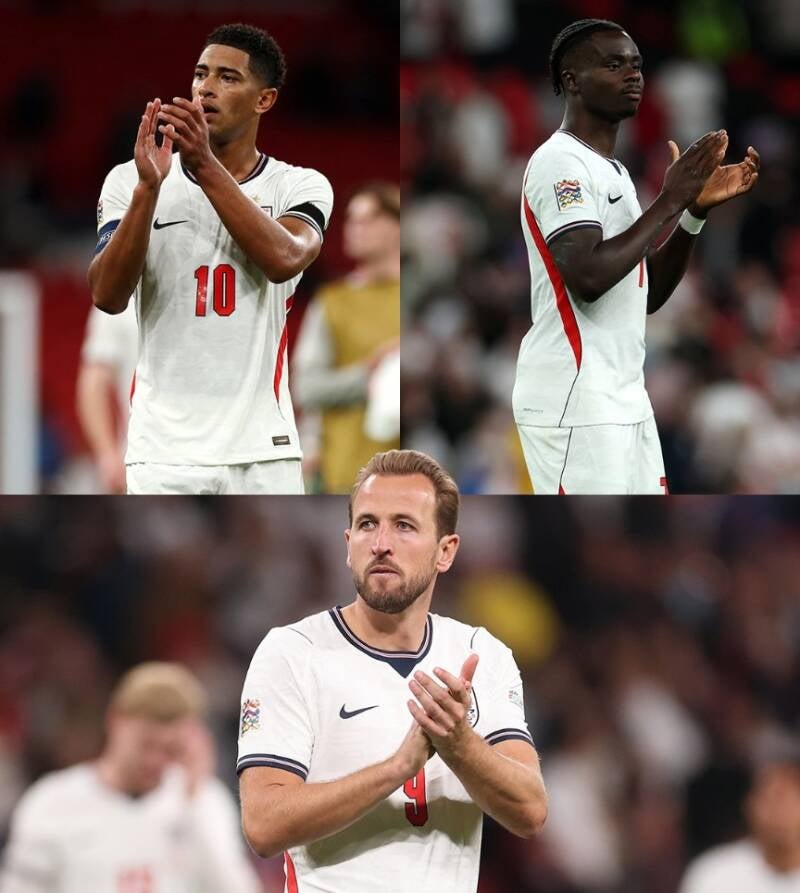
📸 @englandfootball
That is where Tuchel needs to find solutions.
England's counter-attacking threat is exciting, but there will be moments when they need to take the sting out of games. Keeping possession for two or three minutes, slowing the tempo and forcing the opposition to chase the ball can be just as important as launching another attack. The very best international teams understand both sides of the game. England are not quite there yet.
Player Performances
Jude Bellingham was arguably England’s most influential player. His running, physicality and willingness to carry the ball caused Spain problems throughout. His combination with Gordon for the equaliser was excellent and he won the penalty that could have put England 3–1 ahead.
Anthony Gordon produced another strong performance. His directness was perfectly suited to England’s approach and his finish demonstrated composure. His pace gives Tuchel a genuine weapon on the left.
Harry Kane experienced both sides of being England captain. He scored England’s second and remained a threat, but his missed penalty will inevitably dominate discussion because of how dramatically the match changed afterwards. The slip was unfortunate, but big games are often decided by moments that small.
James Trafford can take plenty of positives from a difficult evening. Given an opportunity ahead of Jordan Pickford, he made important saves — particularly during Spain’s dominant opening period — and prevented England from falling further behind. Tuchel has already indicated Trafford will get another opportunity against Czechia.
Marc Guéhi endured a difficult start. His mistake directly led to Yamal’s opener and highlighted the dangers England face when trying to play through an aggressive press.
Nico O’Reilly had a mixed night. His delivery helped create Kane’s goal, but his mistake in the second half was punished by Baena. Against elite opponents, those errors are magnified.
Elliot Anderson deserves credit too. His work in midfield helped initiate England’s equaliser and his aggression gave England something to compete with Spain's technical quality.
What About Thomas Tuchel?
This defeat should not simply be viewed as another reason to criticise the England manager. There were actually several encouraging elements to Tuchel’s approach.
England attempted to attack Spain rather than simply survive against them. They pressed aggressively at times, committed numbers forward and looked dangerous whenever they broke through Spain’s midfield. Tuchel also made some significant selection decisions.
Trafford started ahead of Pickford, while Jarell Quansah was preferred at right-back to Trent Alexander-Arnold. Tuchel later explained that Quansah's defensive qualities and speed were factors in the decision because of the amount of defending England expected to do on that side.
But questions remain about England’s ability to adapt during matches. When Spain regained control, could Tuchel have changed the midfield earlier? Could England have introduced another player capable of retaining possession? Could the substitutions have done more to interrupt Spain’s rhythm?
Spain’s replacements certainly changed the contest. Baena scored the equaliser before creating Oyarzabal’s winner. That is the level England are trying to reach.
Tuchel described the result as a missed opportunity but insisted there were positives to build upon. That assessment feels fair. England showed enough to demonstrate that they can hurt the world's best teams, but also enough weaknesses to show why they are not consistently beating them yet.
What Needs to Improve Against Czechia?
England now travel to Prague to face Czechia on Tuesday night, and there are several areas Tuchel will want to address. England Football confirms the Nations League fixture kicks off at 7.45pm BST at the Fortuna Arena. First and foremost, England have to cut out the individual mistakes.
Spain scored twice following England errors. At international level — particularly against elite opposition — there simply isn't enough time to recover. Secondly, England need greater control in midfield.
There is nothing wrong with embracing England's pace and directness, but they cannot rely solely on transitions. There will be matches where England are expected to control possession themselves, and Czechia could provide an opportunity to demonstrate that.
Thirdly, Tuchel needs to find the right defensive balance. England were repeatedly opened up during the first half against Spain. Trafford made important saves and Torres wasted opportunities. On another night, England could have been out of the game before Gordon's equaliser.
Finally, England need to become more ruthless when they have momentum. That is perhaps the biggest lesson from Wembley.
At 2–1 up with a penalty, England had Spain exactly where they wanted them. Against the world champions, those opportunities do not come around often. When they do, you have to take them.
Defeat — But Not a Disaster
England lost the match, and ultimately international football is judged on results. But there was considerably more to like about this performance than the scoreline suggests.
England responded to a nightmare start, scored twice against the world champions, produced moments of genuinely excellent attacking football and came within the width of the Wembley crossbar of taking a 3–1 lead.
Yet Spain showed the difference between competing with the very best and actually beating them. They punished mistakes. They controlled the game when momentum shifted.
And when their opportunities arrived, they took them. For Tuchel and England, that is the challenge now. The talent is clearly there. The attacking threat is there. There were even glimpses against Spain of what this England team could eventually become.
But if they want to consistently beat the world's elite rather than simply push them close, they have to learn how to control the difficult periods, eliminate the avoidable errors and turn promising positions into victories.
Tuesday night in Prague gives them their first opportunity to respond.
Add comment
Comments