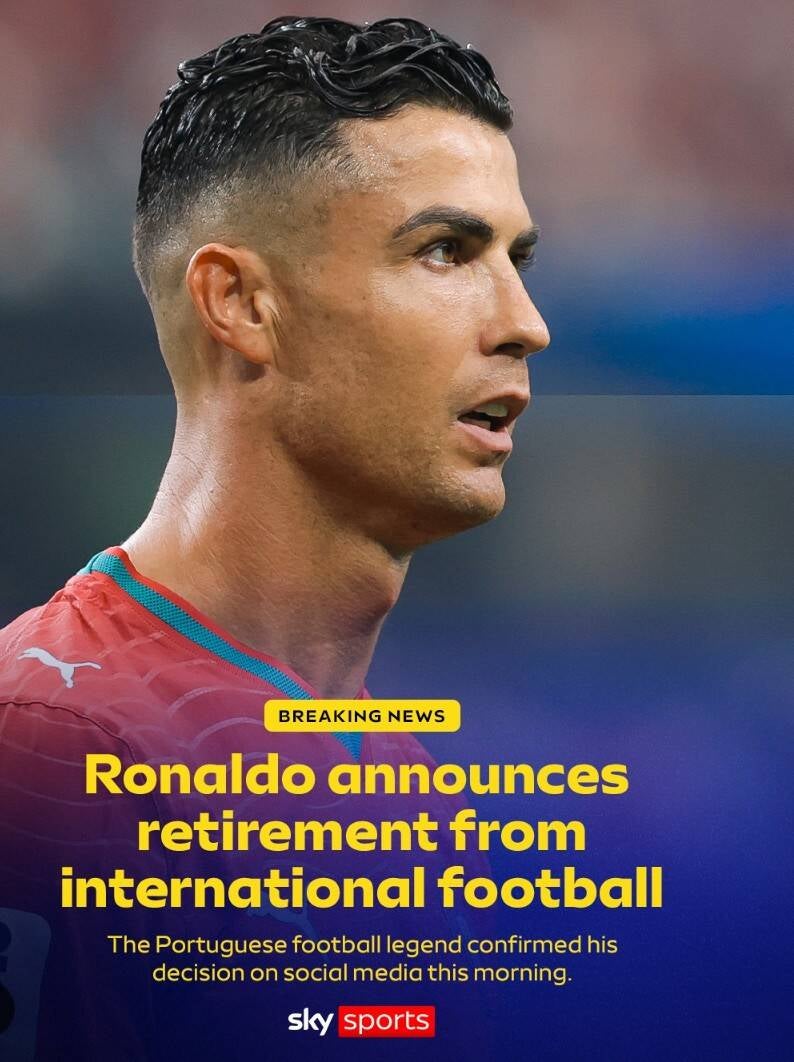
📸 @skysportsnews
After more than two decades representing his country, Cristiano Ronaldo has announced his intention to bring his extraordinary international career to an end. With records shattered, trophies lifted and a legacy that may never be matched, we look back at the Portuguese icon's remarkable journey and asks the ultimate question: is he the greatest footballer of all time?
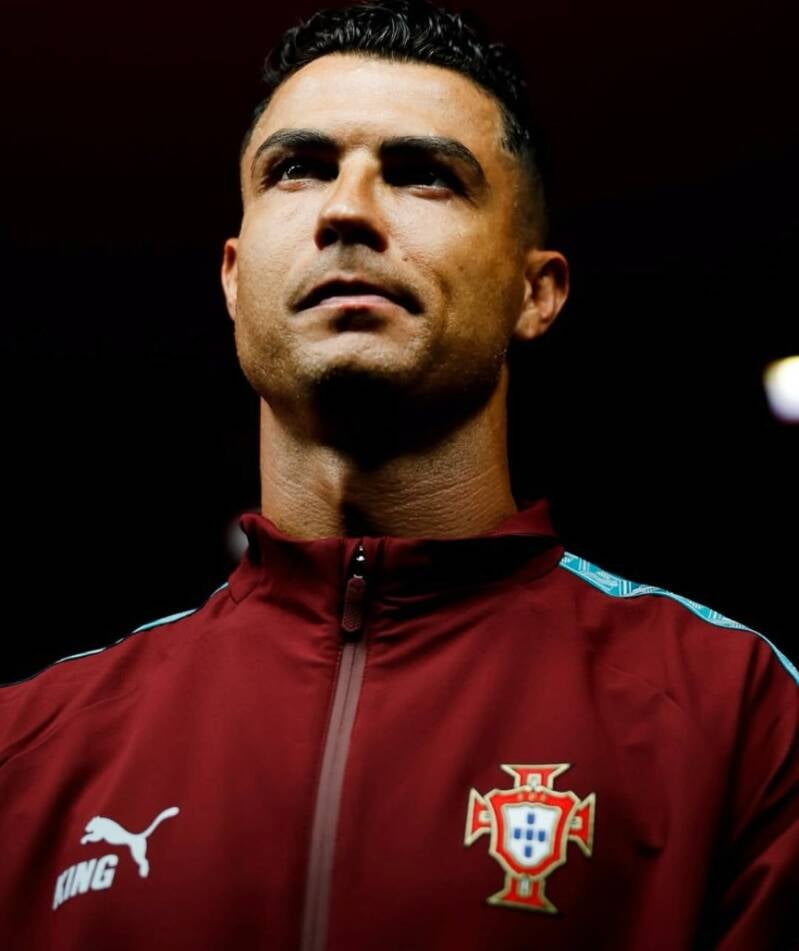
📸 @cristiano
There are great footballers, there are legends, and then there is Cristiano Ronaldo.
For more than two decades, the Portuguese superstar has been one of the most recognisable figures in world football. From a teenage sensation bursting onto the international stage to a five-time Ballon d'Or winner and the most prolific goalscorer in men's international football history, Ronaldo has achieved almost everything the game has to offer.
Now, aged 41, the man affectionately known as CR7 has announced his intention to step away from international football following Portugal's November fixtures, bringing the curtain down on one of the most extraordinary international careers the sport has ever witnessed. But while his achievements are almost impossible to dispute, one question will continue to divide football supporters around the world.
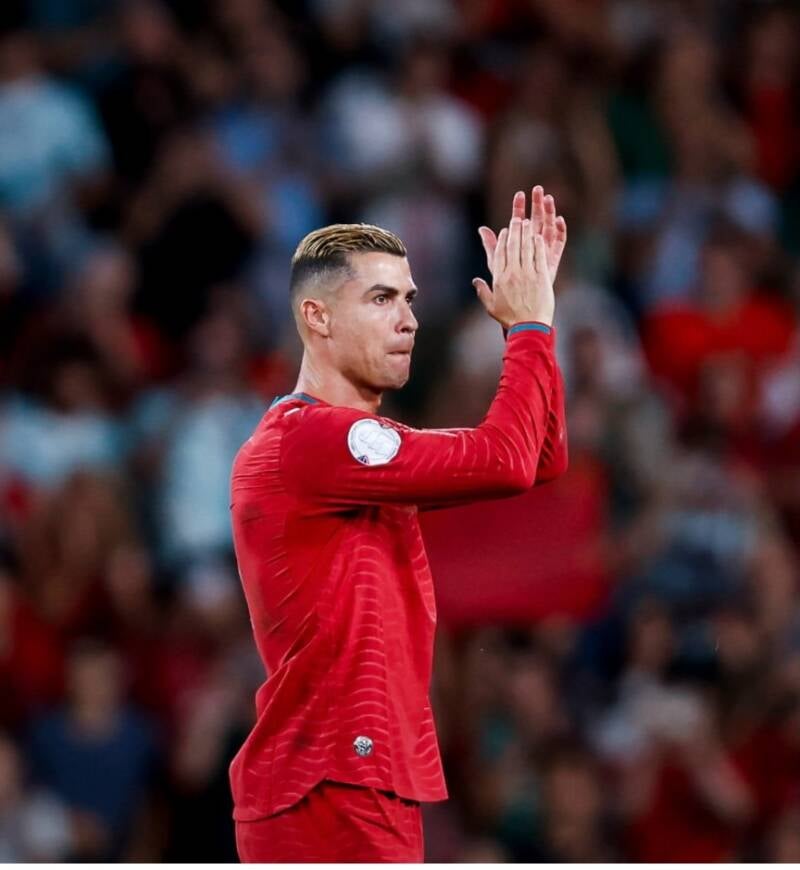
📸 @cristiano
Is Cristiano Ronaldo the greatest footballer to have ever played the game?
From a Teenage Sensation to Portugal's Greatest
Ronaldo's international journey began on 20 August 2003, when an 18-year-old made his senior Portugal debut against Kazakhstan. Few could have predicted what would follow.
Just a year later, Ronaldo announced himself on the international stage at Euro 2004, hosted by Portugal. The youngster scored twice during the tournament, including against Greece in the opening match, and helped his country reach the final. Unfortunately, it ended in heartbreak as Greece stunned the hosts to claim the European Championship. For Ronaldo, however, it was just the beginning.
Over the following two decades, he would become the face of Portuguese football, representing his country across multiple generations, captaining the national side and establishing himself as one of the most feared goalscorers in the history of the sport. He evolved from a skilful winger blessed with extraordinary pace and trickery into a ruthless goalscorer capable of deciding matches with either foot, his head or a moment of individual brilliance.
Perhaps his greatest achievement was not simply reaching the top, but remaining there for so long.
The Numbers That Define a Legend
Ronaldo's international statistics are nothing short of extraordinary. At the time of his retirement announcement, the Portugal captain had accumulated an astonishing 234 international appearances and scored 146 goals. Both figures are world records in men's international football.
Cristiano Ronaldo's Portugal career in numbers
- 234 international appearances – the most in men's international football.
- 146 international goals – the highest total in men's international history.
- 14 European Championship goals – the competition's all-time leading scorer.
- 30 European Championship appearances – another tournament record.
- 11 World Cup goals – scored across an extraordinary World Cup career.
- 1 European Championship title – Euro 2016.
- 2 UEFA Nations League titles – 2019 and 2025.
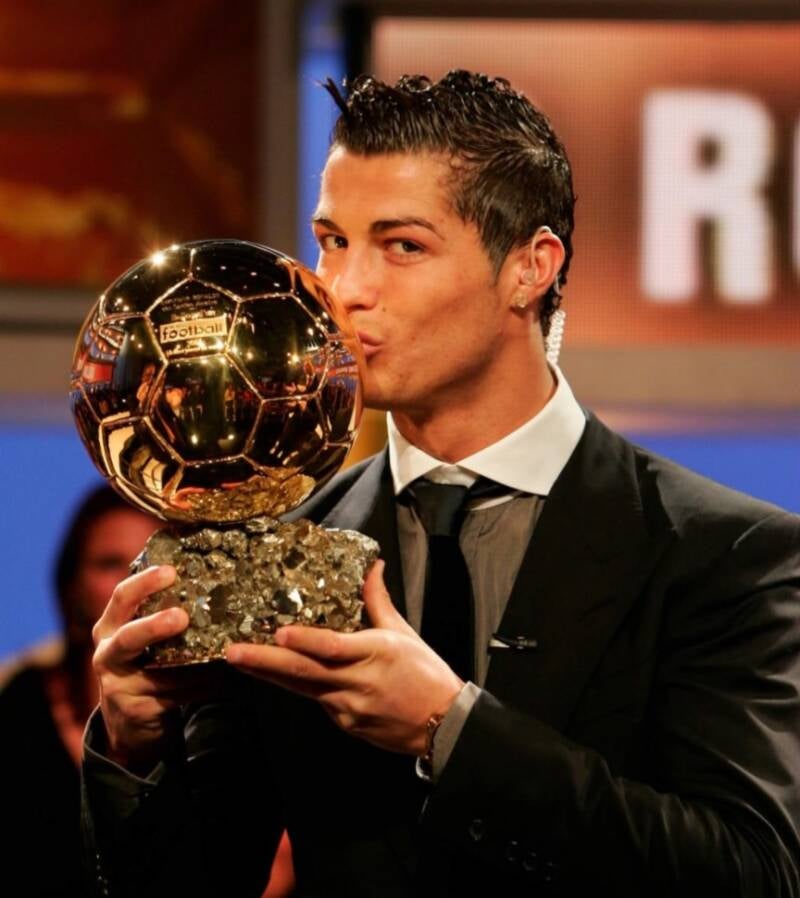
- Five Ballon d'Or awards – recognising his achievements across club and international football.
These are not simply impressive statistics. They represent a level of consistency, longevity and dedication that very few athletes, regardless of sport, have ever demonstrated. Ronaldo has delivered on football's biggest stages, against some of the strongest international opposition and across an era in which the game has become faster, more physically demanding and increasingly competitive.
His records have not been built over a handful of exceptional seasons, but across more than 20 years of representing his country. And that, perhaps, is what makes his achievements so remarkable.
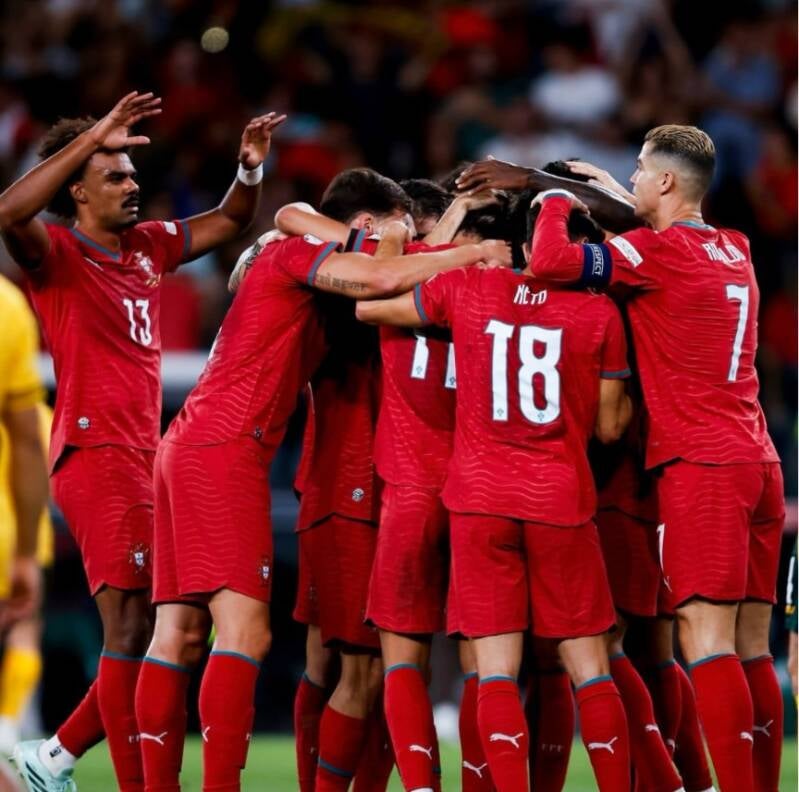
📸 @cristiano
Euro 2016: The Night Ronaldo Became Immortal
If there is one tournament that defines Cristiano Ronaldo's international career, it is undoubtedly Euro 2016. Portugal arrived in France with expectations, but few considered them favourites to lift the trophy. Their journey was far from straightforward.
After drawing all three group-stage matches, Portugal progressed through the knockout rounds, with Ronaldo producing crucial moments along the way. His two goals against Hungary helped Portugal escape the group, while his powerful header against Wales in the semi-final helped secure their place in the final. Waiting for them in Paris were the tournament hosts, France. It was supposed to be Ronaldo's crowning moment. Instead, disaster struck.
After suffering a knee injury following a challenge from Dimitri Payet, an emotional Ronaldo was forced off in the first half. Images of the Portuguese captain leaving the pitch in tears became one of the defining moments of the tournament. But what followed was equally memorable. Ronaldo could be seen passionately encouraging his team-mates from the touchline, almost acting as a second manager alongside Fernando Santos. Then, in extra time, Éder produced the unthinkable.
His long-range strike secured a 1-0 victory and delivered Portugal's first major international trophy. Ronaldo had finally achieved what generations of Portuguese footballers, including the legendary Eusébio and Luís Figo, had been unable to accomplish. He had helped lead Portugal to European glory.
Nations League Success: Proving It Was No One-Off
For some players, winning a European Championship would be enough to cement their legacy. Not Ronaldo. Three years later, Portugal lifted the inaugural UEFA Nations League trophy in 2019.
Ronaldo played a crucial role, scoring a hat-trick against Switzerland in the semi-final before Portugal defeated the Netherlands 1-0 in the final. It was further evidence that Portugal's success in 2016 had not been a one-off achievement. Then came another remarkable chapter in 2025.
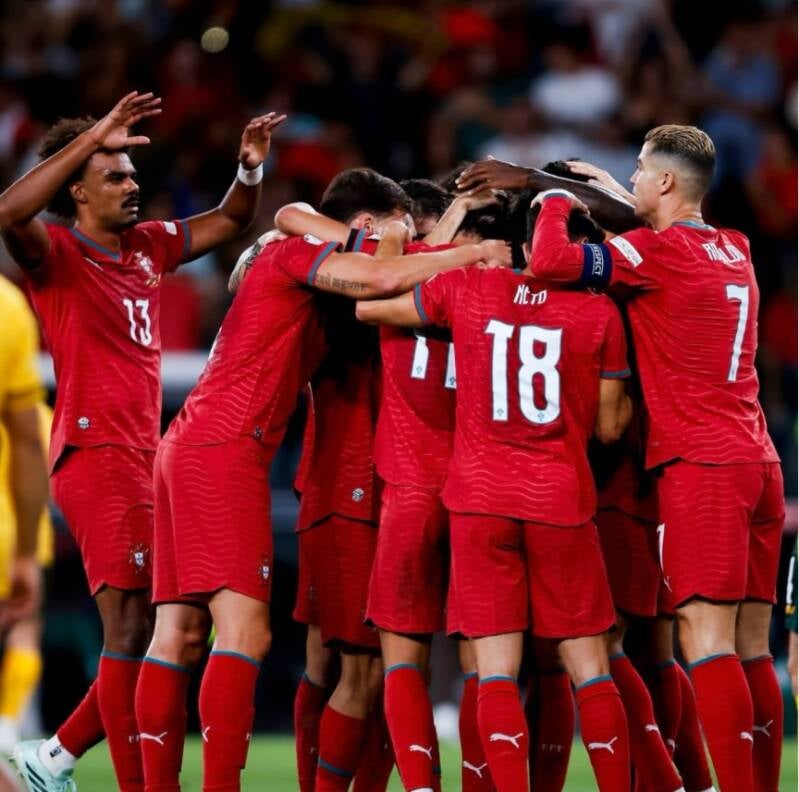
At 40 years old, Ronaldo was still finding ways to influence major international matches. He scored in Portugal's Nations League final against Spain, helping his country secure a 2-2 draw before they eventually triumphed on penalties. It was Portugal's second Nations League title and Ronaldo's third major international trophy. For a player who had made his international debut more than two decades earlier, it was another extraordinary achievement.
📸 @cristiano
The World Cup: The One Trophy That Eluded Him
Despite everything Ronaldo has accomplished, one major honour has remained beyond his reach. The FIFA World Cup.
His performances on football's biggest international stage have provided unforgettable moments, including his famous hat-trick against Spain in 2018 and his goalscoring exploits across multiple tournaments. Yet the ultimate prize has remained elusive. For all his individual brilliance, Ronaldo has never lifted the World Cup. It is perhaps the most significant argument used by those who question his position as the greatest player of all time.
Players such as Pelé, Diego Maradona and Lionel Messi all have World Cup-winning achievements to their names. Ronaldo, despite his remarkable career, does not. But should the absence of one trophy define an individual player's entire legacy? Football is, after all, a team sport.
And while Ronaldo has never conquered the World Cup, he helped transform Portugal into a nation capable of consistently competing for international honours.
Cristiano Ronaldo vs Lionel Messi: The Greatest Debate in Football
It is almost impossible to discuss Cristiano Ronaldo's legacy without mentioning Lionel Messi. For the best part of two decades, the two superstars dominated world football, breaking records, collecting individual awards and pushing each other to extraordinary heights.
Messi's supporters point towards his exceptional vision, natural ability, creativity and World Cup triumph with Argentina in 2022. Ronaldo's supporters highlight his extraordinary goalscoring record, athleticism, versatility and ability to succeed across different leagues and footballing environments. Both arguments have merit.
Messi may be considered the more naturally gifted footballer, capable of controlling a match through his passing, movement and creativity. Ronaldo, meanwhile, represents the ultimate example of athletic development, determination and an almost obsessive desire to improve.
His transformation from a skilful teenager at Sporting Lisbon into one of the most complete goalscorers football has ever witnessed is remarkable. Then there is the longevity.
To remain relevant at the highest levels of international football into his forties is an achievement few would have believed possible when he made his debut in 2003. Ultimately, perhaps the greatest compliment that can be paid to both players is that football may never experience a rivalry quite like theirs again.
📸 @cristiano
Is Ronaldo the Greatest International Footballer of All Time?
There is certainly a compelling argument. No male player has represented his country more times. No male player has scored more international goals. And few players have carried the expectations of an entire footballing nation for such an extraordinary length of time. But greatness cannot be measured purely through statistics.
Pelé won three World Cups with Brazil. Maradona inspired Argentina to World Cup glory in 1986 with performances that remain among the greatest individual displays in tournament history. Messi finally completed his international trophy collection by lifting the World Cup in Qatar. And then there is Ronaldo.
A player who helped deliver Portugal's first major international trophy, captained his nation through an unprecedented period of success and rewrote the international record books. Perhaps the question should not simply be whether Ronaldo is the greatest footballer of all time.
Perhaps it should be whether anyone has ever represented their country with such sustained excellence, determination and hunger for success. On that measure, Ronaldo has very few equals.
A Controversial Ending to an Extraordinary Career
However, Ronaldo's final months with Portugal have not been without controversy. His relationship with national team manager Jorge Jesus became the subject of considerable attention following disagreements over his role within the squad. Tensions reportedly escalated after Ronaldo was left on the bench during Portugal's Nations League encounter with Norway, before further disagreements emerged over his involvement against Denmark.
The situation culminated in Ronaldo leaving the national team camp, with the veteran forward accusing Jesus of breaking assurances about his playing time. Jesus denied that any such agreement had been made. The Portuguese Football Federation subsequently took disciplinary action, handing Ronaldo a 30-day suspension and a €255 fine, approximately £215.
Ronaldo later apologised for his actions and acknowledged that he deserved punishment. For a player who has spent more than two decades representing Portugal, the controversy was an unfortunate development at a time when supporters might have expected his international career to end with celebration rather than disagreement.
It also reignited the debate over whether Ronaldo's continued presence was helping or hindering the national team's development. At 41, with a new generation of Portuguese talent emerging, questions surrounding his role were perhaps inevitable. Yet whatever disagreements have taken place behind the scenes, they should not overshadow what Ronaldo has achieved for his country. One controversial chapter cannot erase more than two decades of extraordinary service.
The End of an Era – But a Legacy That Will Never Be Forgotten
Football has changed dramatically since Cristiano Ronaldo first pulled on the Portugal shirt in 2003. Managers have come and gone, generations of players have retired, and the game itself has evolved almost beyond recognition. Yet through it all, Ronaldo has remained one of its defining figures.
His influence extends far beyond goals, appearances and trophies. He has inspired millions of young footballers, transformed expectations of physical conditioning and demonstrated what can be achieved through relentless dedication. For Portugal, he has been more than simply a footballer. He has been a captain, a record-breaker, a national icon and the face of one of the most successful periods in the country's footballing history.
There will always be disagreements about whether Cristiano Ronaldo deserves to be called the greatest footballer of all time. Some will choose Messi. Others will point towards Pelé or Maradona. But one thing is undeniable.
Cristiano Ronaldo belongs in that conversation. And as the famous number seven prepares to say goodbye to international football, his achievements will stand as a reminder of just how extraordinary his career has been.
234 appearances. 146 goals. Three major international trophies. One remarkable legacy. The Portugal shirt will have another number seven. But there will never be another Cristiano Ronaldo.
Add comment
Comments